whikle
Well-Known Member

... I'd be interested in reading this!
Follow along with the video below to see how to install our site as a web app on your home screen.
Note: This feature may not be available in some browsers.


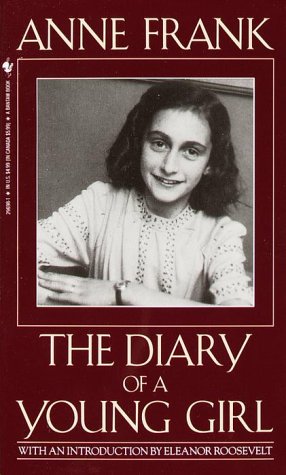
I remember having to do a group read of this book in 8th grade english lit. class,and I didn't take it seriously. Now that I'm reading it as an adult,I'm surprised at how strong and intelligent she was for such a young girl.

It is a much better read as an adult. I just read it last semester for one of my classes.
Along with that book, we also had to read this book:
http://blog.shakeandco.com/2009/10/anne-frank-her-life-in-words-and.html
I HIGHLY recommend it.
It's an amazing supplement to her diary and answers all of the questions of what happened to each member of the house, how they were found, and includes pictures of them all, which I found extremely helpful.
It's an amazing resource and an extremely quick read as it contains mostly pictures and the text included in it is short and sweet.
It's such a heartbreaking story and while I was reading her diary and this supplement, I couldn't help but get angry at how long it took the Allies to finally really do something about the Nazis.
I should add that the link is to a random bookstore because I couldn't find a good image of the book. It should be available on Amazon.com, in your local bookstore, maybe your library, etc.
Thank you BookWorm! I'm going to pick up the 'Words and Pictures' book this evening from the library. Reading Anne's story put things in perspective for me as far as why WWII took place. I learned all of this in elementary and middle school,but I never paid attention or took it seriously. I'm finding myself having to go back and relearn a lot of things that I'd already been taught. I don't know if that's more of a reflection on my teachers or on account of me always goofing off in school :smt043
You're welcome. Did you pick up the book?
Sometimes whilst we're learning things in school, we don't have a context or life experience to really comprehend what we're learning until much later.
I got it,and I'm reading both at the same time. Having those visuals makes 'the diary' that much more interesting. I have a question: I wanted know who gave up their hiding place,so I googled it. There was a list of suspects,but one was Miep Braams and one of the people hiding with the Franks was Miep Gies,are they the same person?
No, they are two different people.
In a book describing the betrayal and transportation to Auschwitz of her own family, Eva Schloss, whose mother Elfriede (Mutti) Geiringer married Otto Frank after the War, tells of the trial of a Nazi collaborator Miep Braams.
"Braams was the girlfriend of a Dutch resistance worker called Jannes Haan, and she was supposed to be helping him protect Jews and help the Resistance. As the war progressed, Haan became suspicious that his girlfriend was really a double agent for the Nazis: an awful lot of the Jewish families he entrusted to her were vanishing without trace, or being rounded up. When she became aware of his suspicions, Braams betrayed Haan to the Gestapo, and he was executed. It was later estimated that Miep Braams was responsible for betraying as many as two hundred Jewish families, including ours." (p. 196)In April 1949, Braams received a sentence of (only) six years. Schloss does not state that she was responsible for the betrayal of the Frank family.
Miep Gies:
Hermine Santruschitz (15 February 1909 – 11 January 2010), better known as Miep Gies, was one of the citizens who hid, her family and four other Jews from the in an annex above Anne's father's business premises during. She was Austrian by birth, but in 1920, at the age of only eleven, Miep was taken in as a foster child by a Dutch family to whom she became very attached. Although she was initially only to stay for six months, this stay was extended to one year because of frail health, after which she chose to remain with them, living the rest of her life in the Netherlands. In 1933 she began working for, a businessman who had moved with his family from Germany to the Netherlands in hopes of sparing his family Nazi persecution because they were. Miep became a close, trusted friend of the family and was a great support to them during the two years they spent in hiding. She retrieved Anne Frank's diary after the family was arrested and kept the papers safe until Otto Frank returned from Auschwitz in 1945, and learned of his younger daughter's death.


Erich Fromm's "The Sane Society".

Indian hill 1-3 by mark tuck
Highly recommended

Currently reading.
Better Off Without 'Em: A Northern Manifesto for Southern Secession - Chuck Thompson